Trekking shoes got their name from the English words track – road, or trekking – hiking. That’s why trekking shoes are called shoes for hiking in the woods, mountains and tourism.
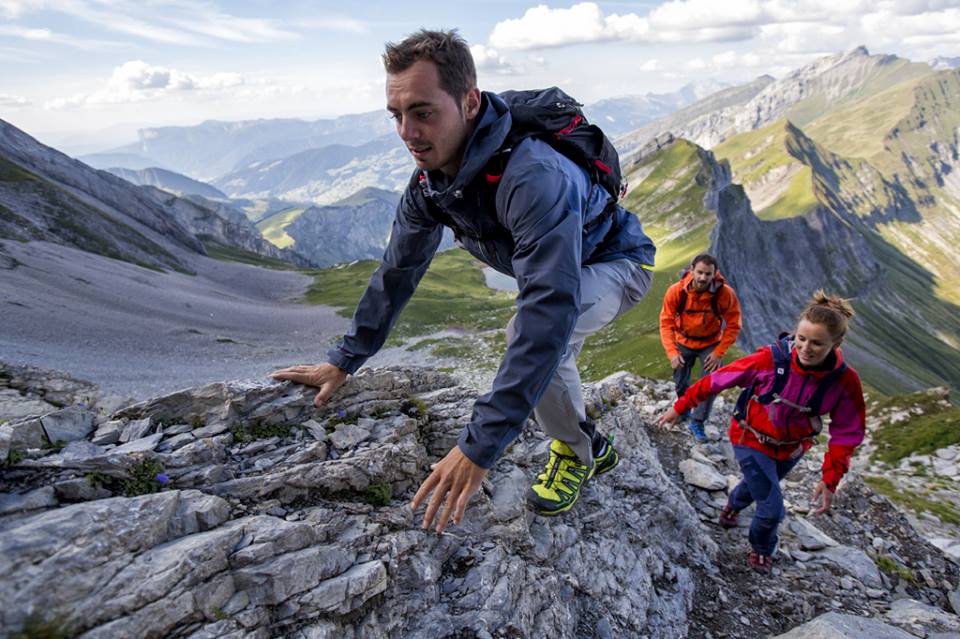
Its main task is to withstand a long intensive load in different weather conditions and on all kinds of terrain. Scientists have calculated that the average experienced hiker walks 10 to 25 km every day! Not all shoes can cope with such a load, especially when it comes to mountain hiking. Trekking boots are ideal for the hiker, but there are quite a few factors to consider when choosing them: the season, terrain, terrain, difficulty and length of the trail, as well as your weight and the amount of cargo you need to carry on your shoulders.
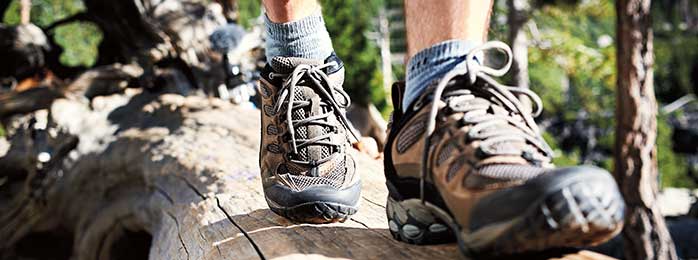
How to choose shoes for the season?
- In summer, appropriate hiking sneakers or lightweight shoes. These shoes have well-designed ventilation that protects the foot from overheating, and the rubberized knat prevents the sock from collapsing. Often the models use membrane technology. It releases the vapor generated inside the shoe and prevents moisture from entering from the outside. Introducing lightweight trekking boots from the British brand
Gelert.
- Trekking boots for the off-season are suitable for fall or early spring. During this period the humidity increases and on the trails, there is often mud, which at night can still freeze. These shoes use Gore-tex technology : membrane fabric does not let water in and does not retain it in the shoe. Feet are well ventilated and do not overheat. Pay attention to the sole: it must have a deep tread, provide good traction, not to slip and support the ankle. And have a high rubberized edge along the entire length of the shoe.
- Winter leather trekking shoes are massive, usually made from a single piece of thick leather, very durable, but heavy, especially if wet. No worse than high-tech synthetic materials. Often technologies are used in the construction of boots
OutDry, eVent, Gore-Tex
and others. The main characteristics are water resistance, a powerful “tractor” sole, some models have a place on the back for attaching “cats.
How to choose shoes, depending on the route, terrain and terrain?
There are three main groups of trails: trekking, hiking and hiking multisport.
The trekking route
is also divided into light, medium and heavy and, depending on the terrain passes through forest, mountain or rugged terrain. In such hikes need shoes that are well-supported and protect the foot – trekking boots are universal.
Hiking – is simply a long walk, the route of which is on well-equipped and specially marked trails, on which there are no serious obstacles, such as walking and traveling around the city. In that case, you need sturdy, comfortable sneakers.
Multisport hiking
– is a common type of hiking, which involves passing various obstacles on artificial or natural terrain (different types of trekking shoes are appropriate)
Buy trekking boots from leading European brands in the online store SportsTerritory!

Depending on the length and severity of the cargo routes can be:
- Lightweight (walking without a load or with a load of up to 10 kg);
- Medium (from 10-15 kg);
- Heavy (20 kg and more).
The complexity of the route also affects the choice of shoes. For example, for easy walks may suit trekking sandals or sneakers, for complex with the presence of rocks, dirt, grass and twigs – it is better to choose boots.
Routes on difficult terrain require special preparation
On such trails, you need to be prepared for surfaces with mud, wet grass and rocks, rocky areas, and water obstacles. The best option is trekking boots with a coarse and deep tread pattern. The entire structure should provide support for the ankle joint and protect the foot from dislocation. Models of this type should have an intermediate sole, which softens the dynamic loads. Any foam material is used for this purpose. The upper part of the shoe must be waterproof, but it would allow the foot to “breathe”. For example, the models
Keen Durand and Karrimor Hot Rock
.
Keen Durand Walking Shoes
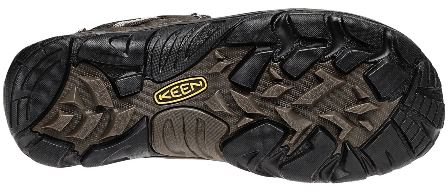 These men’s trekking boots have a waterproof nubuck leather upper with closed mesh panels for extra breathability, Keon.dry membrane technology creates an extra level of waterproof protection, and the dual EVA rubber footbed provides reliable traction on any surface.
Karrimor Hot Rock
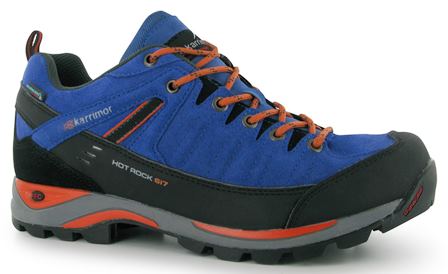
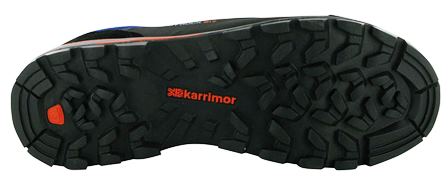
These Karrimor Hot Rocktrekking boots are made of natural suede with Weathertite Extreme weatherproof technology.They have a low ankle stand with comfortable padding and a padded upper, an FFC midsole for cushioning and a DynaGrip outsole for excellent durability and mobility. The sock is protected by a double rubber overlay.
And so, what should be a real trekking boot!
Judging by this scheme, it should be a little simpler than a “spaceship” and have a lot of features and technology:

To summarize:
- Models of men’s trekking shoes are made with a minimum number of seams. Choose a shoe upper made of full leather material. They last longer, and the fabric doesn’t rub on embankments or tear on branches if the route goes through the woods.
- The toe of the boot should be reinforced with a medium-sized rubber overlay. Small or large overlays will not provide the right performance.
- The Vibram rubber outsole provides the right grip on wet surfaces and snow.
- Waterproof boots made with one of the membrane technologies (Gore-Tex, eVent, OutDry) will help protect your feet from moisture.
- One-piece flap on the tongue of the boot. It prevents the ingress of moisture, sand and stones.
- Lacing. These may be models with solid lacing or hooks located at the top.
- The inside of the shoe, especially the back, should be made of soft material. The inside of the shoe should not have seams that protrude and may cause discomfort or rub on the foot.
These are the general characteristics to consider when choosing men’s trekking boots! Buy trekking boots from leading European brands in the online store SportsTerritory!